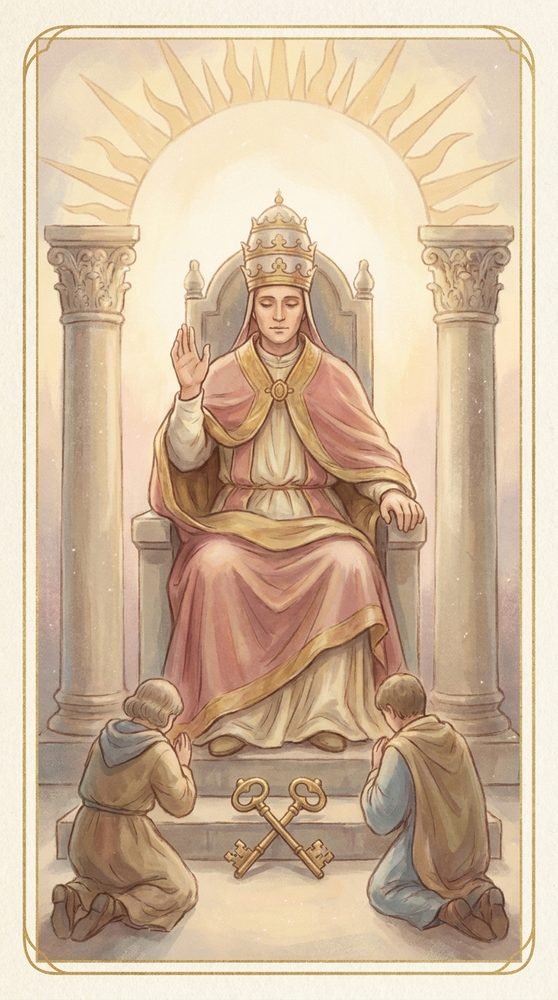
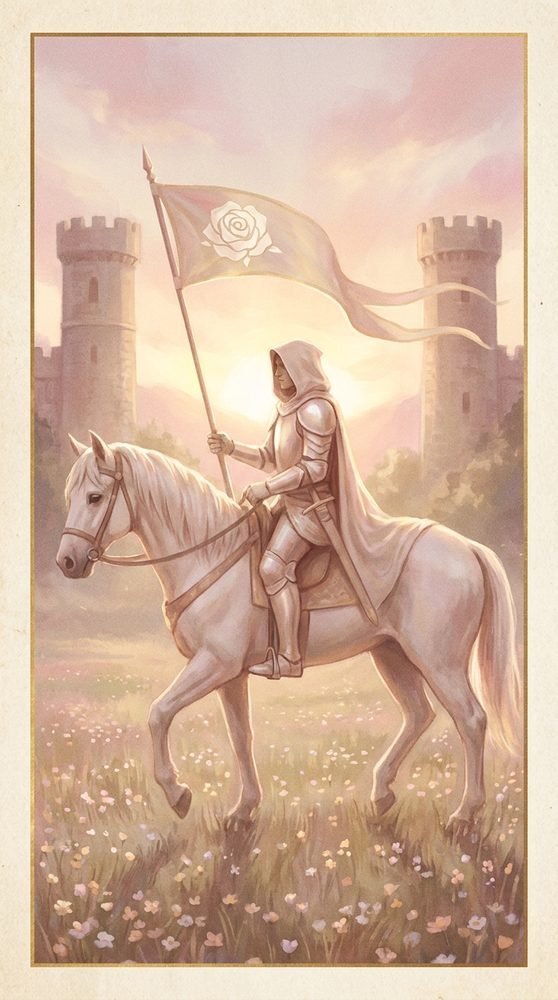
The Hierophant and Death tarot pairing is a taught rule reaching the end of its usefulness. The Hierophant sits between two pillars with two students kneeling in front of him, handing on a way of doing things that was settled long before any of them arrived. Death rides a white horse straight through the middle of the scene, and in his card there is a figure in robes standing in the road, arms raised, trying to have a word with the horse.
That figure in the road is worth noticing, because he is the same sort of authority as the seated one, and the picture is honest about how the meeting goes. Five and thirteen. The first card says there is an established way and it is worth learning properly, and the second says every established way eventually finishes. Both things are true, and this pair is asking which stage you are actually at.
In love
In love, The Hierophant and Death tarot combination often turns up when an expectation about how a relationship is supposed to look has stopped fitting. The timeline you were handed, the order that things are meant to happen in, the shape your parents’ life took and the assumption that yours would rhyme with it.
What you can do here is name what you actually want now, in your own words, and say it once to the person it concerns. You cannot know what they will want in return. You can stop measuring a real relationship against a template neither of you wrote, and that alone changes the temperature of most of these conversations.
At work and with money
At work this is the standard procedure that has quietly stopped working. The Hierophant is right that you learn the method properly before you change it, and Death is right that this one is over. Between them they ask you to know the rule well enough to explain exactly which part is finished, rather than throwing out the whole system on a bad Tuesday.
On money the pair favors clearing and closing over clever new arrangements: the subscription you inherited from a former life, the arrangement set up when you earned differently, the account nobody has looked at since. The Hierophant and Death tarot pairing predicts no figure. Both prefer an honest clean out to a strategy.
When one of them is reversed
With The Hierophant reversed, you are already questioning the rule you were taught, and with Death beside it the change is further along than you have told anyone. Be specific about which belief you are setting down and why, so the decision comes out of thought rather than out of a bad week.
With Death reversed, the old way has finished and is still being performed. The meeting still happens, the tradition still gets kept, the motions continue out of loyalty to people who would not ask it of you. Saying plainly that it is over is a kindness, and it is usually a relief for more than one person in the room.
What to do with this pair
Tonight, write one thing you were taught about how life is supposed to go that you no longer believe, and then write one sentence about what you believe instead. Say the second one out loud once, even if only to the kitchen. Learning a rule properly earns you the right to put it down, and what you build next will be yours from the first brick.
Questions people ask
Does Death in this pair mean something bad is coming?
No, and it never speaks about anyone’s health. Beside The Hierophant it usually means a rule, a tradition or a way of doing things has finished, which is uncomfortable for a while and leaves you with the room and the effort that maintaining it was using up.
What do The Hierophant and Death mean together in love?
They often show up when an expectation about how a relationship is supposed to look stops fitting. The timeline you were handed, the order things come in, the shape somebody else’s life took. Your side of this is naming what you actually want now, rather than the version you inherited.
What changes when one of these two is reversed?
The Hierophant reversed is already the questioning, the taught rule that no longer fits, so with Death beside it the change is well underway. Death reversed means the old way is finished and still being performed, the motions kept up out of loyalty. Say plainly what has already ended.