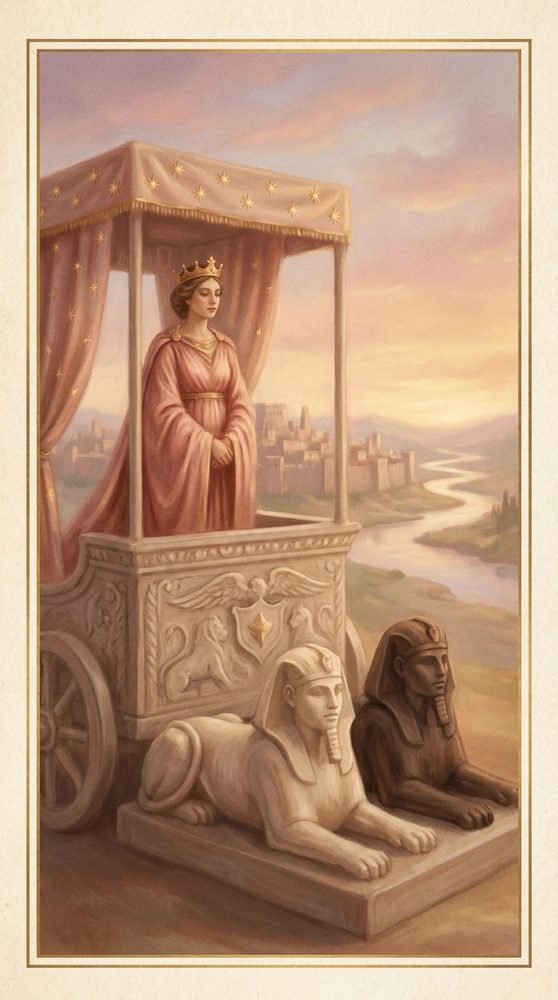

The Chariot and Strength tarot pairing is two entirely different kinds of control sitting side by side. The Chariot is the driver standing upright with a black sphinx and a white one in front of him and the reins gathered in both hands. Strength is a woman with her bare hands resting on a lion’s jaw, no reins anywhere in the picture, and the lion has stopped minding.
Seven and eight, one after the other in the deck, and the order is not an accident. The first card holds a course by gripping it and the second holds a difficulty by not gripping it, and both of them work. The whole reading here is about telling which one the situation in front of you actually needs, because doing the wrong one harder is how people exhaust themselves in perfectly good circumstances.
In love
In love, The Chariot and Strength tarot combination asks you to take part deliberately and then to stay steady once you are in it. The Chariot part is practical: go where people are, reply, book the thing, treat your own love life as something you participate in rather than something that happens to you.
The Strength part is what happens when it gets difficult. You can meet somebody’s rough week with warmth instead of a tally, and you can hold your own position without raising your voice. Patience with a hard stretch is one thing and patience with contempt is quite another, and this pair never asks you for the second. What anyone else decides stays with them.
At work and with money
At work this pair covers ambition and composure in the same breath. The Chariot is good for pushing a project over the line and for competing without apology, and Strength is the long unglamorous middle where progress is real and slow and nobody is clapping. If you are handling a difficult person, your calm is the professional skill here, not a personality trait.
On money both favor discipline over cleverness, sticking to the plan when the progress looks flat and staying consistent rather than dramatic. The Chariot and Strength tarot pairing predicts no amount. Strength adds one more thing worth hearing: stop shaming yourself about decisions you made with the information you had at the time.
When one of them is reversed
With The Chariot reversed, the effort is not going anywhere useful. You are either pulled evenly in two directions or pushing at something that stopped responding a while ago. The answer is not more force, and the woman with the lion would tell you the same. Name the direction you want and let the other wait.
With Strength reversed, your patience has genuinely run out and pretending otherwise is not helping. Sometimes the grip has turned inward and all the harshness is aimed at you. That is what running on willpower for months looks like, and the repair begins by lowering the standard rather than gathering the reins tighter.
What to do with this pair
Today, pick the one thing you have been pushing at and stop pushing for twenty four hours, while keeping every ordinary commitment you already made to it. Notice what changes and what does not. You are better at holding a course than you give yourself credit for, and the harder skill, the one in the second picture, is knowing which difficult things settle when you take your hands off the reins.
Questions people ask
What do The Chariot and Strength mean together in love?
They ask you to take part deliberately and to stay warm under pressure. Go where people are, follow up, keep your own commitments. Then meet a difficult week with patience rather than scorekeeping. Neither card asks you to be patient with being made small, and neither can steer another person for you.
What changes when one of these two is reversed?
The Chariot reversed is effort going nowhere, pulled evenly in two directions or pushing at something that has stopped responding. Strength reversed means the patience has genuinely run out, which is what months of willpower do. Soften the standard before you add any more force.
What should I do when these two come up together?
Decide which of the two the situation actually needs. Some things move because you hold the line and keep going, and some things settle only when you stop gripping them. Doing the wrong one harder is the most common mistake this pair describes, and it is worth naming out loud.