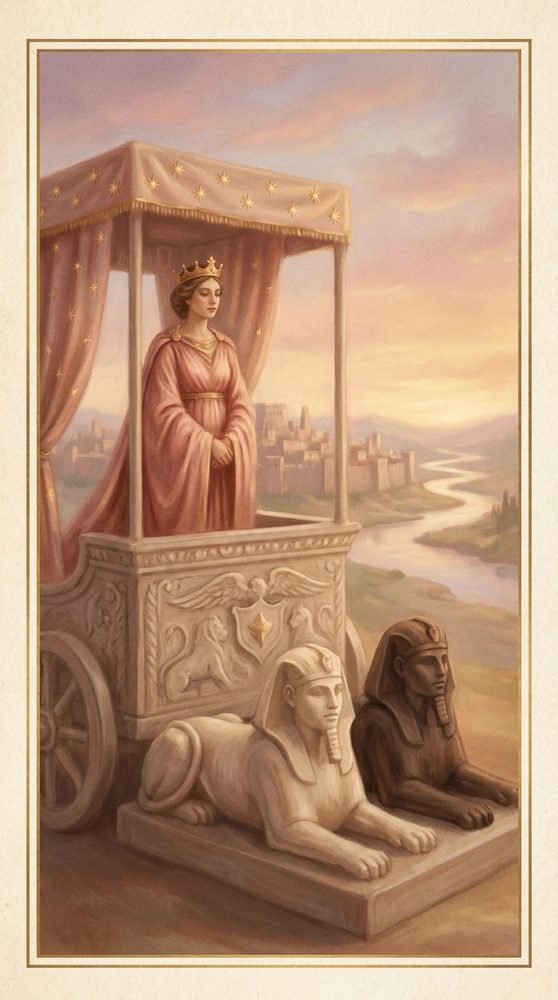
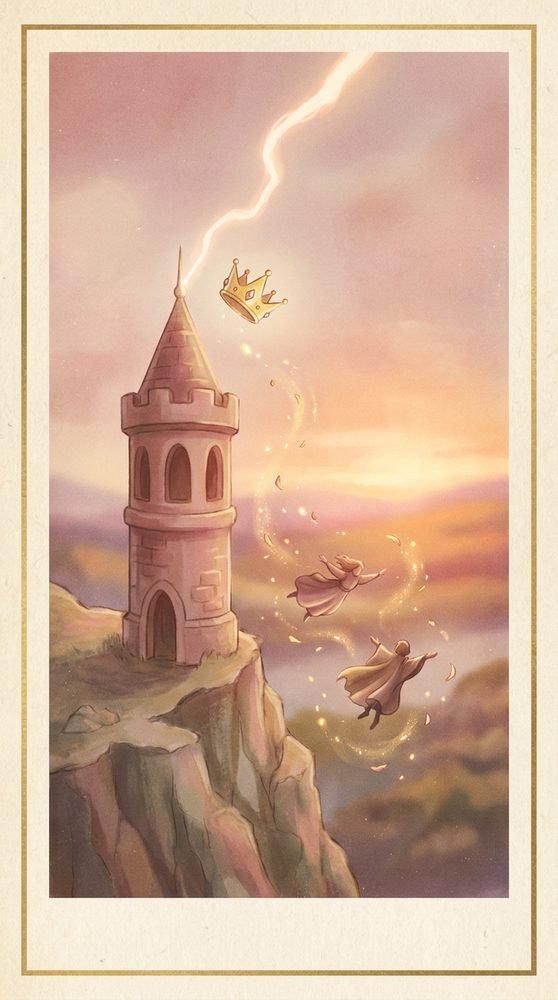
The Chariot and The Tower tarot pairing is hard momentum meeting a structure that was already leaning. The Chariot is the driver standing up in his car with the reins in both hands and a walled city at his back, going somewhere and not slowing down. The Tower is stone and lightning, the crown coming off the top and two figures in the air.
The detail that makes this pair itself is the masonry. The Chariot has left a walled city behind him and The Tower is a wall coming down, so the two cards are the same building seen from two positions. Seven and sixteen, and sixteen reduces to seven, which is the number of being tested. What this pair actually says is that effort is not the thing in question here. The foundation is.
In love
In love, The Chariot and The Tower tarot combination usually describes a shake to an understanding that both of you had been driving along with. The conversation underneath all the surface conversations arrives, and it is uncomfortable for a week and more honest afterward. Nothing here predicts that a relationship ends.
Your side of it is the steadying. You can decide how you speak when you are shaken, you can ask the plain question rather than reading the silence, and you can stop propping up a version of things that only works if nobody looks directly at it. What another person does with the honesty is theirs, and you will find out by asking rather than by pushing harder.
At work and with money
At work this pair points at the assumption nobody checked. The Chariot has been pushing the project along and The Tower says something underneath it was built on a guess. Spend an hour finding the single point of failure, the one supplier, the one login, the one person who knows how it works, and fix that rather than adding effort to the parts that are already sound.
On money, keep a buffer and avoid resting a plan on one outcome. The Chariot and The Tower tarot pairing predicts no restructure and no figure. Both are practical about the same thing: what falls down in a day was leaning long before, and a leaning thing can be propped deliberately once you know where it is.
When one of them is reversed
With The Chariot reversed, the effort is already going nowhere useful, pulled two ways or pressed against something that stopped responding. When the shake comes it lands as a stop rather than a shock, and the honest relief in that is worth naming. Choose one direction afterward rather than restarting everything at once.
With The Tower reversed, the collapse is delayed or internal. Sometimes it is a near miss that let you see the cracks, sometimes it is a thing held upright by your will alone while everyone around you can see the strain. Ask yourself what you are still holding, and whether you would pick it up if it were on the ground.
What to do with this pair
Before this week is out, write down the single thing your plan rests on and what happens if it gives, then spend one hour on that alone. Not on the whole plan, and not on driving faster. You are strong at holding a course, and the skill this pair is asking for is knowing what the course is built on, so that the next shake is something you repair rather than something that catches you standing up.
Questions people ask
What do The Chariot and The Tower mean together in love?
They point at an understanding that gets shaken and a person who keeps driving anyway. Often the real conversation finally happens, the one underneath the surface ones. No card predicts an ending. What is yours here is how you steady yourself and what you are willing to say plainly afterward.
What changes when one of these two is reversed?
The Chariot reversed means the force is already going nowhere, so the shake is less a shock than a stop. The Tower reversed is a near miss or a thing held together by will alone while everyone can see the strain. The honest question is what you are still propping up.
What should I do when these two come up together?
Look for the assumption nobody has checked. This pair rewards a practical hour spent finding the single point of failure in your plan rather than another hour of effort applied to the parts that are already fine. Knowing where the crack is turns a shock into a repair.