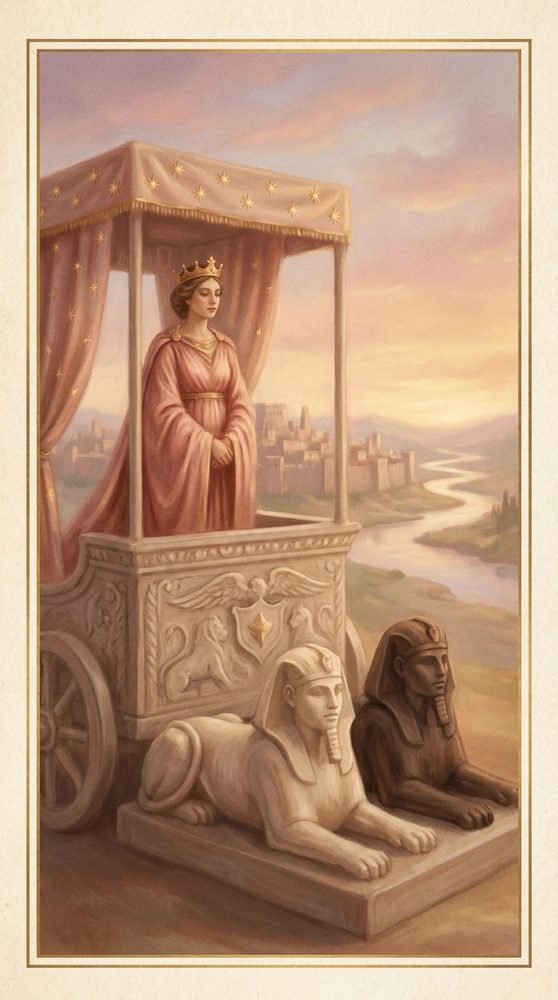
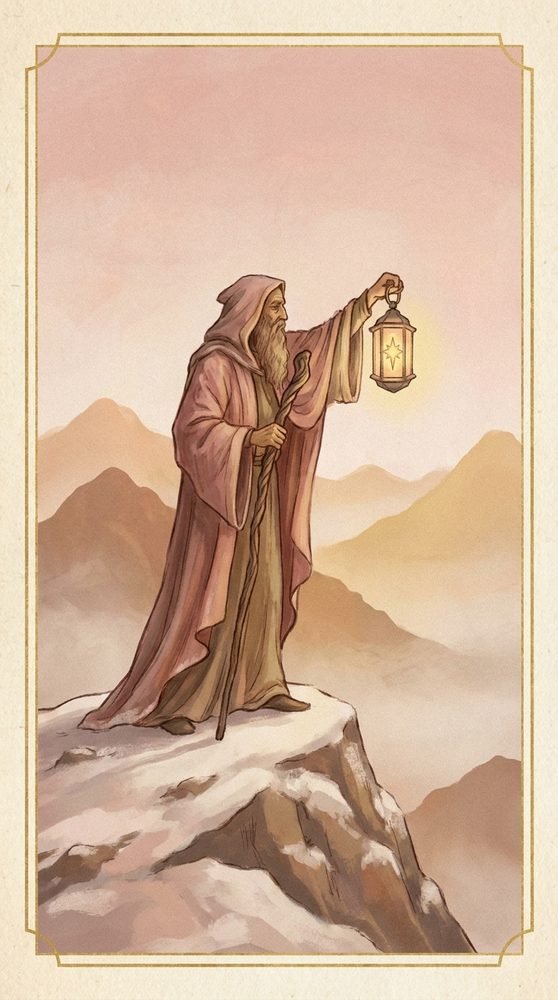
When The Chariot meets The Hermit, the reading asks whether you are moving well in a direction you have not checked lately. The Chariot and The Hermit tarot pairing is momentum sitting next to reflection, and the two of them are not arguing so much as taking turns, which is the part people miss when they read this as a stop sign.
The pictures tell you which turn it is. One shows a driver upright behind two creatures, city walls already behind him, going somewhere at speed. The other shows a figure alone on a high ridge in the cold, holding up a lamp that lights about three steps of the path and no further. Together they say the leaving happened, and now the question is where, and nobody on that ridge can see far enough to answer it for you.
In love
In a love reading the Chariot and The Hermit tarot combination sits between taking part and needing your own room. The Chariot says treat your love life as something you are in: go out, reply, arrange the second meeting rather than waiting to be arranged. The Hermit says you also need the evening with nobody in it, and that this is not the same thing as being lonely.
If you are with someone, ask for that evening plainly, because withdrawal without explanation reads as rejection to almost everybody and one sentence prevents the whole misunderstanding. If you are single, the time spent working out your own pattern changes who you choose next, which is slower than pushing harder and considerably more useful.
At work and with money
This pair often arrives when someone has been pushing a project well and has stopped asking whether they want the thing at the end of it. The Chariot is strong for ambition, competing and getting something over the line. The Hermit prefers review: audit the accounts, look at whether the role still fits, call the specialist you have been meaning to call for a month.
On money the Chariot and The Hermit tarot pairing favors discipline with a look at the actual figures first. Cut what you do not use, then push. Neither card predicts an amount. What they suggest together is that one honest evening of review is cheaper than another quarter of excellent effort aimed slightly to the left of what you want.
When one of them is reversed
With The Chariot reversed, the effort is not landing. You are either pulled evenly in two directions or pressing on something that stopped responding weeks ago, and more force will not fix either. The Hermit beside it is practically offering you the room to work out which direction you actually want.
With The Hermit reversed, the quiet has gone past useful and turned into hiding. Replies have got shorter, and things that were close now feel further off. Check whether the door you closed for good reasons is still closed for those reasons. Sometimes the answer is yes, and sometimes it is only that opening it again would take a message you have not written.
What to do with this pair
This week, take one walk on your own with nothing in your ears and come back with an answer to a single question: what am I actually driving at here. Knowing where you are going is not a delay, it is the cheapest part of the whole trip.
Questions people ask
What do The Chariot and The Hermit mean together in love?
They balance taking part with needing your own room. Go where people are and follow up, and also ask plainly for the evening alone rather than going quiet without saying why. Unexplained distance reads as rejection to nearly everybody, and one sentence prevents most of it.
What changes when one of these two is reversed?
The Chariot reversed means effort that is not landing, either pulled two ways or pushed at something that stopped responding. The Hermit reversed means the quiet has turned into hiding, where a door you closed for good reasons is still shut mostly out of habit and everything feels further away.
What should I do when these two come up together?
Stop for one evening before the next push. This pair almost always means you are moving well in a direction you have not checked lately, and an hour of honest review saves months of momentum spent on something you had already outgrown.