Flatness is not sadness, and the difference matters when you are trying to work out what would help. Sadness has a subject. Flatness is the absence of pull: nothing is wrong, nothing has started, and the week goes by without anything in it that you were looking forward to.
Citrine is the stone people reach for in that stretch, usually after somebody told them it was for money.
What citrine means
The commercial meaning is wealth. It gets called the merchant’s stone, it is put in tills and wallets and the corner of the room somebody read about, and there is no evidence for any of it beyond the fact that yellow stones have always been associated with gold.
The meaning we find useful is appetite. Not the grand sort, just the return of wanting things: a film you actually want to watch, a walk you would take even though it achieves nothing, a phone call to the friend who makes you laugh. Warm, small, slightly pointless. That is what comes back first when a flat month starts to lift, and a warm colored stone in the morning light is a reasonable thing to hang that on.
What citrine cannot do is pay a bill, find you work, or lift a depression. If the flatness has lasted months, has taken your sleep or your appetite with it, or has started to feel like a fog you cannot get out of, that is a doctor’s conversation and a stone has nothing to offer it.
How people use it
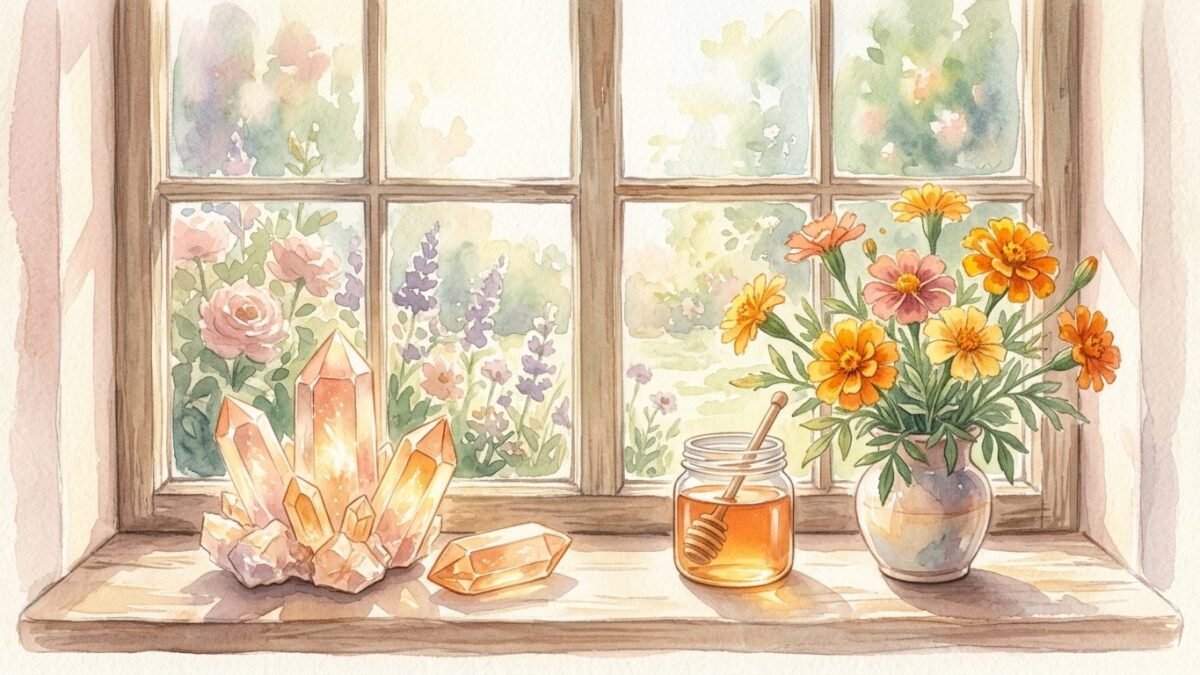
On the windowsill or the kitchen table, positioned so that it is the first warm thing you see. Whatever else the morning brings, one object in it was chosen on purpose, which is more than most mornings can say.
At the desk, it works as the marker for the small enjoyable thing you have promised yourself later, which is how people who are good at flat weeks get through them: not by waiting to feel motivated, since that reliably does not arrive, but by putting one warm thing in the day and letting the rest follow.
Carried, it suits the person who is starting something, and it goes in the pocket on the day of the first small step rather than being saved for the launch.
The card it goes with
The Sun, a child on a white horse under a wall of sunflowers, which is the least complicated card in the deck and the one people are most suspicious of. It does not promise a good year. It shows what plain ordinary warmth looks like when it comes back.
The intention for both: one warm thing today, chosen because I want it. No usefulness allowed in it, which is the part that makes people uncomfortable and the part that does the work.
Three minutes in the morning
Pick the stone up before the phone and name one thing you are going to do today that has no purpose beyond your own enjoyment. Say when it will happen, roughly, and keep it small enough to survive a bad afternoon.
Put it back in the light. In the evening, pick it up again and say whether the thing happened. Not as a scoring exercise, since a fair few days will be no, but because saying it out loud is what turns an idea into a habit.
Wear it
There is no citrine piece in the collection yet. It is one we are adding, and until it arrives, a plain gold piece from the shop does the same job, worn on the days you need the warm thing in view rather than in a drawer. A stone you can see from where you are sitting is worth more than the right stone you have to go and find.
If nothing has lifted by spring
Then it was never a flatness that a windowsill could reach, and the kind thing to do for yourself is to say so to somebody whose job it is to help. The stone is a good habit. It is not treatment and we will not pretend it is.
Questions people ask
Is citrine really the money stone?
It is sold that way, and a stone in the till has never brought anyone a customer. What it can do is sit where you will see it first thing and remind you of the small warm action you decided on, which is how flat months actually lift, one ordinary thing at a time.
Why is so much citrine orange?
Because a great deal of it started life as amethyst and was heated until it turned. That is standard practice and not a scandal as long as the seller says so. Natural citrine tends to be paler and more lemon than the deep burnt orange you see most often.
Does it need the windowsill?
It likes being where the light is, mostly because that is where you will see it, though strong sun will fade it over months in the same way it fades amethyst. A morning sill is ideal. An afternoon one will slowly cost you the color.