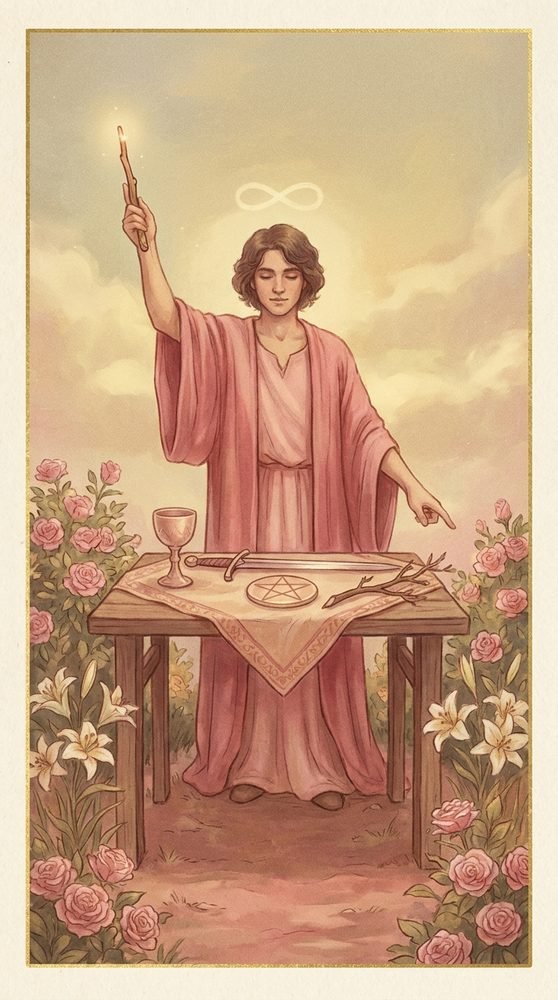
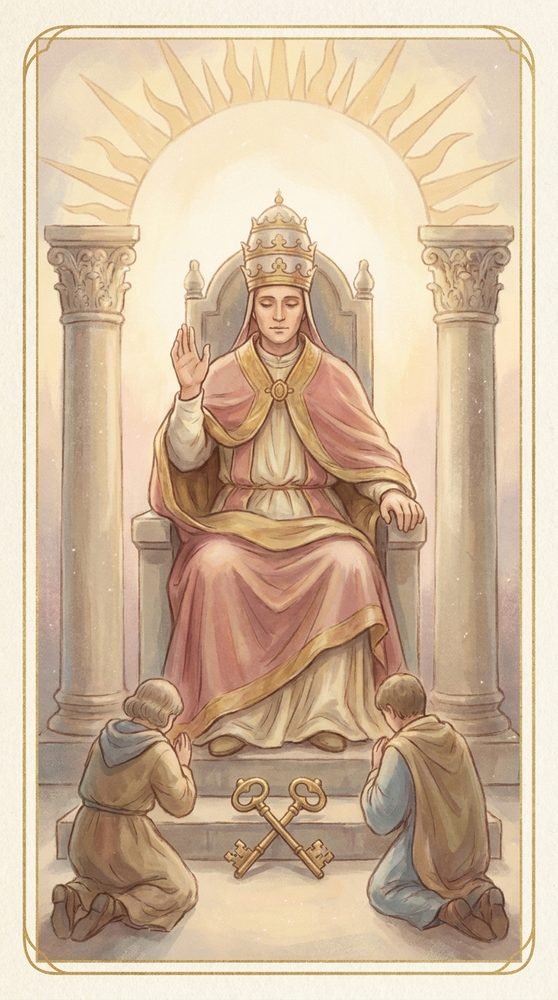
When The Magician and The Hierophant appear together, the question underneath is whether to invent this or learn how it is already done. The Magician and The Hierophant tarot pairing sets the person at their own table, cup and coin and sword and wand laid out, beside the person with two keys crossed at his feet and two students kneeling to be taught.
The friction between them is real and it is useful. The Magician trusts the equipment already in the room and is happy to improvise with it. The Hierophant says somebody has done this before you, properly, and wrote down what went wrong. Read together they usually mean the same practical thing: learn the established method first, then carry it back to your own table and use it your way.
In love
In love, The Magician and The Hierophant tarot combination is about the difference between chemistry and shape. The Magician half asks you to get clear with yourself about what you want and then say it. The Hierophant half asks the slower question of whether you and this person want the same kind of life, which is what actually keeps people together over years.
If you are single, this pair suggests being honest about the shape you are looking for instead of keeping it vague in order to seem easygoing. If you are together, it often shows up around the formal steps, the moving in, the ring, the conversation about family. You can say what you want without knowing what the answer will be, and the saying is the part that belongs to you.
At work and with money
This pair likes the proper method. If you have been improvising the bookkeeping, the contracts or the technique itself, The Magician and The Hierophant tarot pairing says learn the standard way now rather than after something breaks. The skill you already have is real, and it gets considerably better inside a structure somebody tested before you.
Find the mentor, take the short course, read the actual guidance rather than a summary of it. On money this pair favors the well understood over the clever, and it dislikes shortcuts quietly rather than sternly. The Magician’s answer to a rate you have never raised is to ask; The Hierophant’s is to find out what the going rate is before you do.
When one of them is reversed
With The Magician reversed, your focus is scattered across too much, or a quiet belief is running that you are not the sort of person who pulls this off. The Hierophant’s answer to that is oddly comforting: you do not have to be. You only have to follow a method that works for ordinary people, which is the entire reason methods exist.
With The Hierophant reversed, a rule you were taught no longer fits who you have become, and The Magician is the one holding the alternative. Be specific about which belief you are setting down and why, so the change comes from thinking rather than from irritation, and keep the parts of the old way that still earn their place.
What to do with this pair
This week, find one person who has already done the thing you are working on and ask them a single specific question, by message, before you spend another evening working it out alone. You are not cheating by learning it properly. Every method you were ever handed was made by somebody who was guessing first.
Questions people ask
What do The Magician and The Hierophant mean together?
A choice between inventing this and learning how it is already done, usually settled in favor of both. Learn the established method first, properly, then bring it back to your own table and use it your way. The skill you have is real and it gets better inside a tested structure.
What does this pair mean in love?
It separates chemistry from shape. The Magician asks you to know what you want and say it plainly, and The Hierophant asks the slower question of whether you and this person want the same kind of life. Agreeing on what matters is what keeps people together across years.
What if The Hierophant is reversed?
A rule you were taught no longer fits the person you have become, and obeying it now costs more than setting it down. Be specific about which belief you are questioning and why, so the change comes from thinking rather than from irritation, and keep whatever parts of the old way still work.