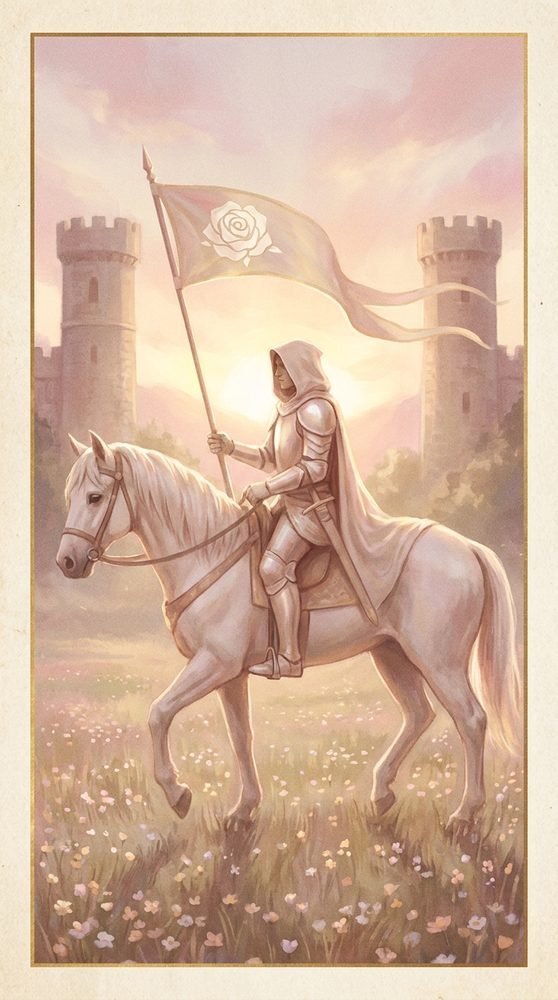
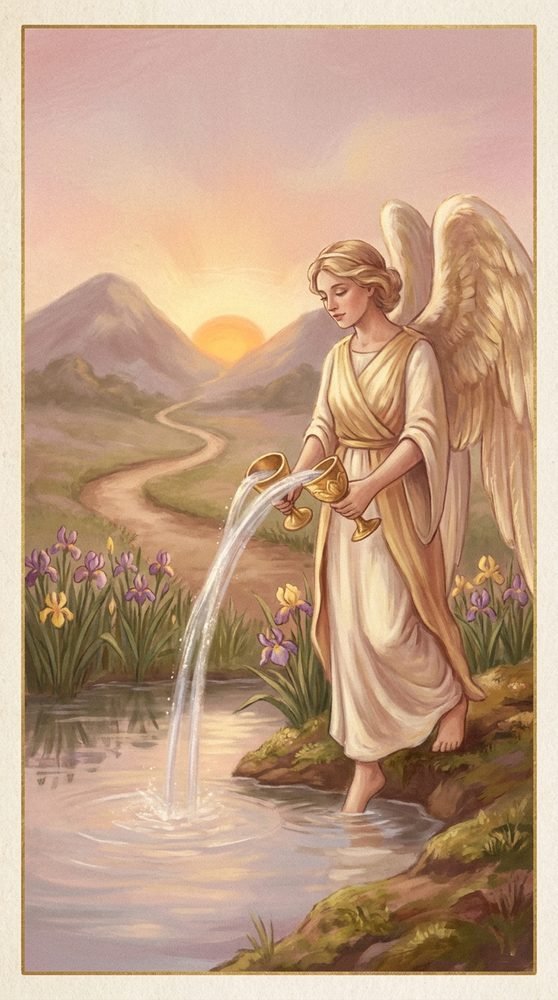
These two sit next to each other in the deck, thirteen and fourteen, and they share a river. In Death there is water behind the rider with the sun coming up between two towers, and in Temperance somebody is standing at the edge of that same kind of stream with one foot in the water and one on the bank, tipping liquid slowly between two cups. The death and temperance tarot pairing is the ending and the week after it, in that order.
What they say together is that the hard part is behind you and the unremarkable part is now. Death is a chapter that has genuinely finished, never a statement about anybody’s health, and when something truly ends the effort you were spending holding it together comes back to you faster than you expect. Temperance is what to do with that returned effort: mix it back into an ordinary life slowly, in proportions you can keep up, rather than pouring all of it into the first thing that will take it.
In love
In love, the death and temperance tarot combination usually describes a relationship changing form and then a quieter stretch of repair. Sometimes the change is an ending. Just as often it is something outgrowing the shape it was being kept in, and what follows is the two of you working out what the new shape actually is, which happens over ordinary days rather than in one conversation.
Temperance favors compromise that is genuinely mutual rather than one person doing all the adjusting, and it has no time at all for ultimatums. If you are single, this pair often marks the close of a pattern, the type you kept choosing, and a calmer way of meeting people afterward. You cannot know what anybody else will decide about any of it. You can set the pace on your own side and keep it, which is the part that actually holds.
At work and with money
At work this is a working chapter closing and a sustainable rhythm beginning. Death favors letting go of what is only being kept out of habit: the draining client, the role you have been finished with since last year, the task nobody has questioned since it was invented. Temperance favors sustainable effort over sprints and is a good card for anybody coming out of a flat, burnt out stretch.
On money, the death and temperance tarot pairing leans toward clearing and closing rather than accumulating, and toward proportion rather than restriction. Cancel the thing you do not use, close the loose end that has been quietly costing you, and then spend in a way that leaves room and save in a way you can keep up. Neither card predicts a figure and neither is trying to.
When one of them is reversed
With Death reversed, the ending is being resisted. Something is over and you are still going through the motions, still hoping this week comes out differently, and that stretches the difficult part rather than sparing you any of it. Saying the true sentence plainly, first to yourself, is where the relief starts, and it is usually a shorter sentence than you have been preparing.
With Temperance reversed, the proportions have gone off: too much of one thing, or a week so tightly restricted that nothing has any give in it, or impatience with a recovery that only ever works slowly. The correction is much duller than it sounds. One modest daily thing, kept up for a fortnight, does more here than any amount of resolve.
What to do with this pair
This week, choose one small thing you will do every day, sized for a tired version of you rather than an ambitious one, and start it tonight. The ending already did the heavy work. What is left is the slow mixing, and it asks far less of you than holding the old thing together ever did.
Questions people ask
Does the Death card here mean a death?
No. Death in tarot is an ending that clears space, and it is never a prediction about anybody’s health. With Temperance beside it the reading is about what comes afterward: the slow, unremarkable mixing back into an ordinary life, which is genuine work even though nobody applauds it.
What do Death and Temperance mean together in love?
Often a relationship changing form, followed by a stretch of repair through ordinary days rather than through gestures. Temperance favors compromise that is genuinely mutual rather than one person adjusting, and it dislikes ultimatums. If you are single, it usually marks the end of a pattern and a calmer way of choosing.
How long does the recovery part take?
No card can put a date on that, and the guessing tends to make it harder. What this pair does say is that the pace you can keep will get you further than the pace you can admire, and that recovery counts as progress rather than as time off from it.