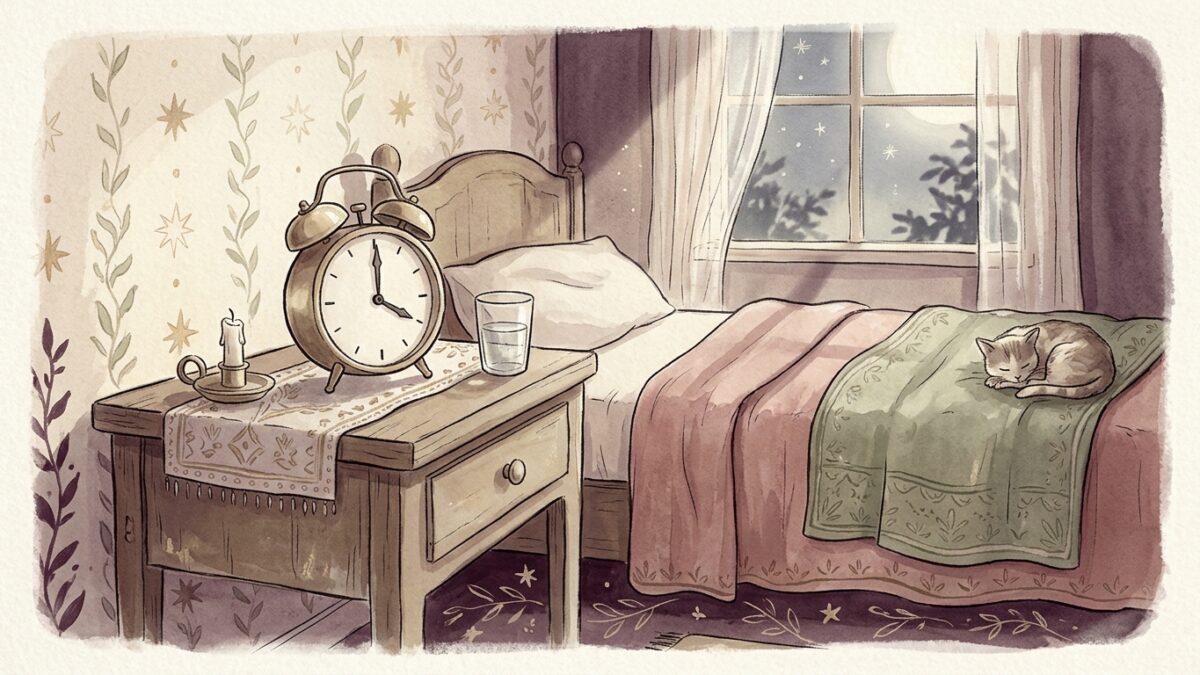
Waking at 4am is read in many spiritual traditions as a quiet hour of heightened intuition, a time when the day’s noise is gone and something you have been avoiding can finally reach you. Ordinary sleep science has a plainer explanation, and it is usually the right place to start: the second half of the night is lighter sleep, and the body begins its pre-dawn rise in alertness around this time. This page holds both, so you can read the hour with warmth and still look after your sleep.
The ordinary reasons first
Sleep runs in cycles of roughly ninety minutes, and the cycles later in the night contain more light sleep and less deep sleep. That makes the hours before dawn the easiest time to be woken by a noise, a full bladder, a warm room, a late glass of wine, a streetlight or a thought. Stress and a busy mind make it more likely, because worries that were pushed aside during the day tend to arrive when nothing else is competing for your attention. Changes in hormones, age, shift work and new routines also move it around. If you wake at 4am now and then, it is very common and not a message of any kind.
What traditions say about waking at 4am
The hour before dawn has been treated as special for a very long time. In the yogic and Ayurvedic traditions, the period roughly an hour and a half before sunrise is called Brahma muhurta, considered the clearest time for meditation and study. Christian monastic life has long set aside a night office of prayer, kept in the dark hours before morning. In the traditional Chinese organ clock, the hours from three to five are linked with the lungs, which that tradition associates with grief and letting go. Folk belief in many places also calls the small hours a thin time, when it feels easier to sense what is usually drowned out.
These traditions do not agree about the details, and they do not need to. What they share is the observation that this hour is quiet, and that quiet is when we hear ourselves.
What waking at 4am can say about your life
Read as a sign, waking at 4am is most often taken as an invitation rather than a message: something in you wants attention, and the night is the only time it can get a word in. If you wake with a particular thought, that thought is the thing to notice, a conversation you have been postponing, a decision that is still open, or a loss that has not had its time. If you wake with no thought at all, only awake, it can simply mean that you are carrying more than you are admitting, and that your evenings could be gentler.
Patterns are worth watching. Does it happen after certain days or certain conversations? Does it follow a stretch of late nights, or a phase of the moon? Over a couple of weeks, small notes will tell you more than any guide can.
If it feels like a visit
Some people, especially in the months after losing someone, wake at the same early hour and feel a quiet sense of company. If that is your experience, there is no need to explain it or argue with it. It can be comforting to treat the hour as a small appointment with your memories: a minute of remembering, a thank you said quietly, and then rest. Grief also disturbs sleep in very ordinary ways, so both things can be true at once, and being gentle with yourself is the right response either way.
What to do when you wake
Keep a small notebook and a pen by the bed. If a thought is circling, write it in a line or two and add the words “for the morning” beneath it, so your mind can put it down. Try slow breathing, in for four counts and out for six, a few times. Avoid reaching for your phone, because the light and the scrolling wake you fully. If you are still awake after what feels like twenty minutes, get up, sit somewhere dim with a warm drink, read something gentle, and go back to bed when you feel sleepy. Some people like to use the hour on purpose, with a few quiet minutes of meditation, a single tarot card or a page of writing, and then return to sleep. That is a fine way to meet it, as long as it does not become a reason to stay awake.
The honest part
Waking at 4am and not getting back to sleep is very common, and most of the time it passes. If it happens most nights for more than a few weeks, if you feel exhausted during the day, or if it comes with low mood or anxiety that is hard to shake, please talk to a doctor. Sleep is a body matter first, and a spiritual reading should never be your only explanation. A spiritual reading and a doctor’s visit do not compete, and you can do both.
The card that sits with it
In tarot, the 4am hour belongs to the Hermit: a lone figure on a hilltop at night, holding a lantern that lights only the next few steps. It is the card of quiet, of turning inward, and of finding that the answer is smaller and nearer than you expected. Read for this sign, it suggests that you do not need to solve anything at this hour. You only need to see the next step by the light you have, and it will still be there in the morning.
Questions people ask
What does it mean spiritually to wake up at 4am?
Many traditions treat the hour before dawn as quiet and intuitive, a time when thoughts you have set aside come forward. It is usually read as an invitation to notice what you have been avoiding, not as a message. Plain sleep science also explains it: sleep is lighter in the early morning hours.
Is waking up at 4am normal?
Yes. Sleep gets lighter in the second half of the night, and noise, stress, alcohol, a warm room or a full bladder can all wake you. Waking now and then is common. If it happens most nights for weeks, or leaves you exhausted, speak to a doctor.
Why do I wake up at 4am every night?
Common reasons are stress, a busy mind, alcohol in the evening, light or noise, temperature, hormonal changes and a shifting routine. A steady evening routine and a notebook by the bed often help. If it continues for weeks or affects your days, ask a doctor.
What should I do when I wake up at 4am?
Avoid your phone, write down any circling thought in a line, and breathe slowly, in for four and out for six. If you are still awake after about twenty minutes, sit somewhere dim with something gentle to read and return to bed when you feel sleepy.