What the Five of Swords means
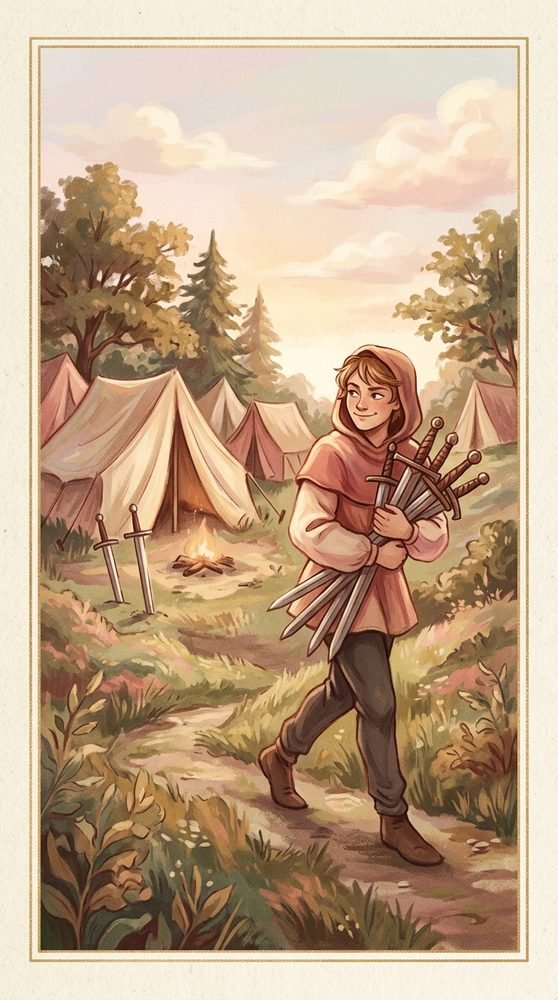
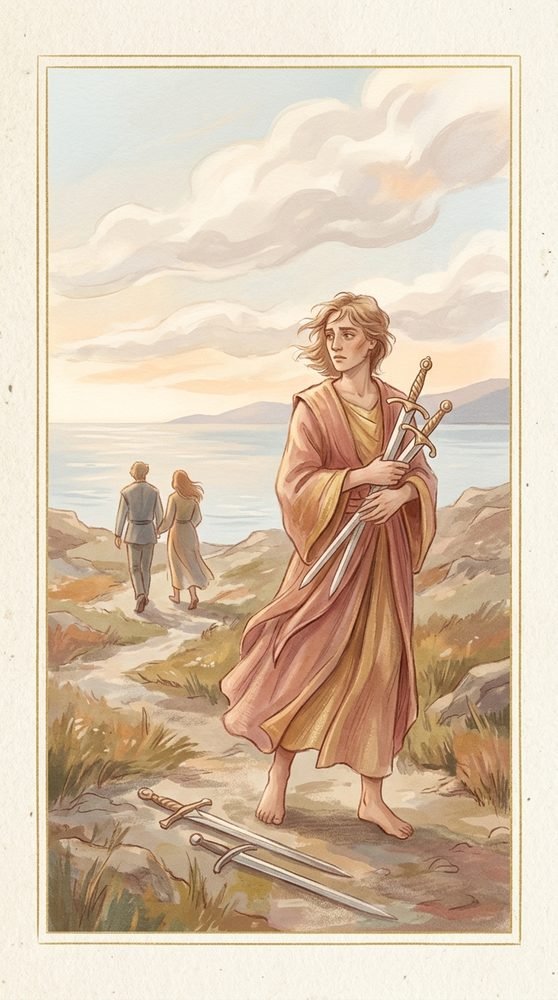
The Five of Swords describes a win that cost more than it was worth. One figure stands in the foreground holding three blades with a small, satisfied expression, while two others walk away with their backs turned and their heads down. Nobody in the picture looks like they gained anything. That is the whole point of the card. It deals with the moment after an argument where you got the last word and the room went cold, or where you were technically correct and something between you and another person is now different. Fives bring disruption, and the disruption in this one is the cost that follows being right.
Five of Swords upright meaning
Upright, this is the card of the disagreement you technically won. It can also describe being on the other side of it, walking away from something because staying would have cost you more than losing does. Both readings are honest and only you can say which is yours. What runs through it either way is the tension of a situation where winning and getting what you actually want have come apart. Sometimes the fight was necessary and you would do it again. Sometimes you were tired and it escalated and now nobody can quite remember what started it. Upright, the card asks you to look at the bill rather than the scoreboard.
Five of Swords reversed meaning
Reversed, the Five of Swords softens, though not always quickly. In its better sense it is the moment somebody decides the feud is not worth continuing, an apology offered without conditions, a message sent to someone you have not spoken to in months. In its harder sense it is resentment that has settled in and gone quiet, where the argument is over and the coolness remains. It can also point to being unable to let go of a defeat, running the conversation again with better lines. Reversed, the card is not insisting that you forgive anyone. It is asking whether carrying this is still doing anything for you.
Five of Swords in love
In love, the Five of Swords usually describes a pattern rather than a single row. Two people who have started keeping score, where every disagreement pulls in three older ones, and where being right has quietly become more important than being close. It can also point to a situation where one person consistently gives ground to keep the peace and has begun to resent it. If you are single, it sometimes describes coming out of something that ended badly and still feeling the sting of how it was handled. The card does not tell you who was at fault. It asks whether the way you argue is getting either of you anything you want.
Five of Swords in work and money
At work and around money, this card covers competitive situations where the atmosphere has soured. A colleague who takes credit, a negotiation that turned personal, a team where people have stopped being generous with each other. It can also describe winning something at work, a decision, a client, a promotion, in a way that has left resentment behind you. On money it counsels against fighting over amounts that are small relative to the energy involved, and against decisions made mainly to prove a point. Where something genuinely needs escalating, do it formally, in writing and without heat, because this card goes badly for people who make it personal.
Five of Swords as a yes or no card
As a yes or no, the Five of Swords is a no, and its reason is worth hearing. It is rarely saying you would fail. More often it is saying you could push this through and would not enjoy what you were left holding. The cost usually shows up in a relationship, a reputation, or your own peace of mind, and it shows up after the decision rather than during it. If you still want to go ahead, the card is not stopping you. It is just asking you to be honest about what you are trading away and to decide with that in view.
When it shows up as your card of the day
If the Five of Swords is your card of the day, watch the temperature of your conversations. It tends to show up on days when people are short with each other and small things get sharper than they need to be. You do not have to win anything today. Let the inaccurate comment go, leave the group chat argument alone, and if you find yourself composing a reply that you are rather pleased with, wait an hour before sending it. Where a real disagreement needs having, keep it to the actual subject. On days like this, arguments expand to fill whatever space you give them.
A small step to take with it
Ask yourself what you actually want at the end of this disagreement, and check whether being proved right is on the list. Write the answer down in a sentence, because it is harder to fool yourself in writing. Usually what you want is something practical, an arrangement changed, a task shared differently, an acknowledgment. Being right is rarely the thing itself, it is the route you have been taking toward it, and it is a route that tends to make the other person defend themselves rather than agree with you. Once you know what you want, you can ask for that directly and skip the part where somebody has to lose.
Questions people ask about Five of Swords
Is the Five of Swords a bad card?
It is an uncomfortable one rather than a bad one. It describes conflict and its aftermath, which nobody enjoys, but it also arrives with useful information about what a fight is really costing. Plenty of people draw it and recognize a situation they had already decided to step out of.
Does the Five of Swords mean I am in the wrong?
Not necessarily. The card does not assign blame, and sometimes you are the one walking away in the background rather than the one holding the blades. What it asks is a fairer question, which is whether the way this is being handled is serving you, regardless of who started it.
What does the Five of Swords mean after an argument with my partner?
It suggests the argument settled nothing and left something behind. What it will not tell you is what your partner is feeling or what they will do next, because that is theirs. What it asks of you is whether you are ready to talk about the actual issue rather than about who said what.
You can be right and still lose the thing you were arguing for.