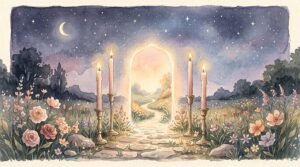
The Beaver Moon 2026 is full on Tuesday the twenty fourth of November, in the middle of the day in Europe and the morning in America, so the nights to look up are Monday and Tuesday. It is the first of three supermoons in a row, which means it sits a little closer to the Earth than an average full moon and looks a touch larger and brighter as it rises.
Here is when it happens where you are, why it carries such an unglamorous name, what a full moon in Gemini tends to stir, and one small thing to do with it.
When is the Beaver Moon in 2026
The moon is exactly full at 14:53 UTC on Tuesday the twenty fourth of November. In local time that is:
- 6:53 in the morning on Tuesday on the Pacific coast of America
- 9:53 in the morning on Tuesday on the East Coast
- 2:53 in the afternoon on Tuesday in the UK
- 3:53 in the afternoon on Tuesday across most of western Europe
- 1:53 in the morning on Wednesday the 25th in Sydney and Melbourne
Because the exact moment falls in daylight for much of the world, the moon you actually see is the one rising on Monday evening and again on Tuesday evening, both of them full to the eye. In the hours before dawn on Tuesday it sits close to the Pleiades, the small misty cluster also called the Seven Sisters, which is worth a look with ordinary binoculars. The moon phase page shows tonight’s moon, and the whole year is in the full moon calendar.
Why it is called the Beaver Moon
The name comes from the old almanac lists of moon names, usually credited to Algonquin speaking peoples of north eastern America and to the colonial trappers who learned from them. November was the month the beavers were finishing their lodges and laying in food before the ponds froze, and the month trappers set their lines before the ice made it impossible. Other names for the same moon are the Frost Moon and, in some modern pagan calendars, the Mourning Moon.
I like the beaver version best, because it is so practical. It is not a moon of omens. It is a moon of someone getting the roof sorted before the weather turns.
A supermoon, the first of three
A supermoon is simply a full moon that happens near the closest point of the moon’s orbit. The difference is real but modest: a little bigger and brighter than an average full moon, and more noticeable low on the horizon than high in the sky. November, December and January all qualify this winter, and December’s, on Christmas Eve, is the closest of the three. If you have been meaning to start a moon habit, these three months make an easy run of it.
A full moon in Gemini
Astrologically the Beaver Moon falls in Gemini, opposite the Sun in Sagittarius. Gemini is the sign of conversation, questions, letters and second thoughts, the twins who see both sides. A full moon is a culmination, so this one tends to bring something said, or unsaid, to a head: the message you have been drafting in your head for weeks, the question you keep almost asking, the two versions of a plan you have been carrying at once.
The card that belongs to Gemini is The Lovers, which is less about romance than about choosing with your whole self. If this full moon has a question, it is roughly this one: which of my two stories am I going to live in?
How to see it at its best
Watch it rise. A full moon comes up around sunset, and in late November that is early, somewhere between four and five in the afternoon across much of Europe and North America, so you can often catch it on the way home. Low on the horizon it looks largest and often takes on a warm, amber colour. Give your eyes ten minutes away from screens and street lights and the surface detail comes up surprisingly clearly, even without binoculars.
A small Beaver Moon ritual
This one takes ten minutes and a piece of paper. Draw a simple house, a lodge if you like, and inside the walls write the three things you want to have in place before the dark months properly start: one practical, one about a person, one about you. Outside the walls, write what you are not going to carry into winter. It might be a grudge, a habit, or a job that was never yours.
Keep the paper somewhere you will see it until the solstice. The point is not magic. It is that a beaver does not build the whole lodge in a night, and neither do you.
A three card Beaver Moon spread
If you would like to ask the cards, lay out three:
- What I am building, the shelter I most need this winter
- What needs repair before the cold comes
- The conversation this full moon is asking me to have
The third card is the Gemini one, so read it as a voice. Swords there tend to mean something needs saying plainly; Cups, that something needs saying kindly; Pentacles, a practical agreement; Wands, an invitation. For a fuller reading, the full moon reading draws the cards for you and writes them out.
What else is happening that week
Mercury finished its autumn retrograde on the thirteenth of November, so the backward drift is over, and I have written honestly about what Mercury retrograde does and does not do. Two days after the full moon it is Thanksgiving in America, and the Sunday after is the first of Advent, the start of the slow count towards the longest night. If you like to plan ahead, the winter solstice spread is ready for the twenty first of December, and the next full moon, on Christmas Eve, is the Cold Moon.