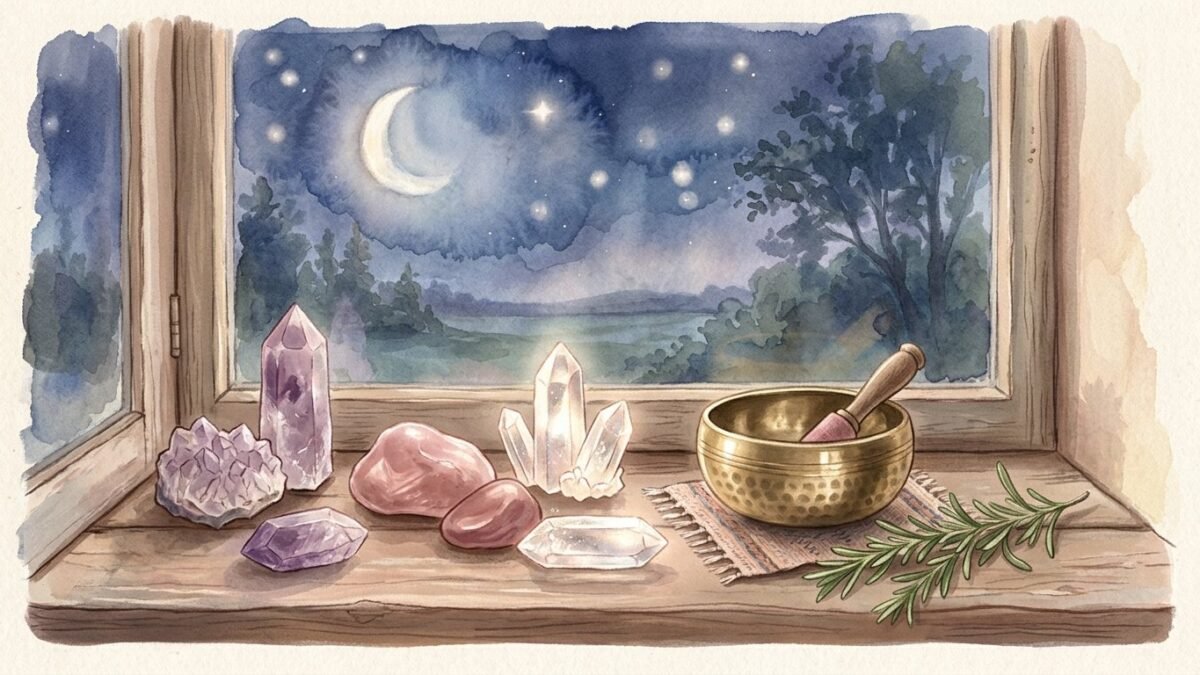
If you have been wondering how to cleanse crystals, you have probably already found fifteen methods and a warning attached to each one. Some of that advice is worth following, because a few popular methods will quietly ruin certain stones. Some of it is ritual, and ritual is allowed to be simple. Here is the honest version: what cleansing is for, the methods that are safe for almost everything, and the ones to skip for particular stones.
Why people cleanse crystals, and what I honestly think
The idea behind cleansing is that a stone picks up something from the people and places around it, and that it needs clearing now and then to feel like itself again. There is no scientific evidence that crystals absorb anything of the sort, and I would rather say that plainly than dress it up.
What I have seen, though, is that cleansing works as a small act of care. It makes you pick up a stone you have been ignoring, look at it properly and decide again what you want it to remind you of. That is the part I think is real, and it is why the method matters less than the attention.
How often to cleanse your crystals
A gentle rhythm is enough: once a month, often around the full moon, and whenever a stone has been through something with you, such as a hard week, a house move or a period where you carried it every day. A new stone is traditionally cleansed when it arrives, which is also a nice way to welcome it into the house.
Seven safe ways to cleanse crystals
Moonlight
Leave your stones on a windowsill or outside overnight, especially under a full or waxing moon. It is the gentlest method there is, safe for every crystal, and it has the loveliness of a tiny monthly ritual. Bring them in before the morning sun if any of them fade in daylight, which I come to below. The full moon calendar will tell you the next good night.
Sound
A singing bowl, a small bell, a tuning fork, or even a clear chime from a glass tapped with a spoon. Ring it near the stones a few times and let the sound fade completely each time. Sound is ideal for large collections and delicate pieces because nothing touches them.
Your breath
Hold the stone, think of what you want it to hold for you, and breathe out over it slowly, three times. It sounds too simple, and it is the method I use most, because it turns cleansing into a moment of deciding.
Smoke
Pass the stone through the smoke of a stick of incense, a sprig of dried rosemary or a bundle of herbs. Open a window, keep it brief, and never leave anything burning unattended. White sage is sacred to several Native American nations and has been heavily over-harvested, so rosemary, lavender or a good incense are kinder choices.
Running water, for hard stones only
A minute under a cool running tap suits hard, non-porous stones such as clear quartz, amethyst, rose quartz, black tourmaline, tiger’s eye and black onyx. Dry them straight away with a soft cloth. Never soak, and never use hot water, which can crack stones through sudden temperature change.
A bowl of dry brown rice
Bury the stone in a bowl of uncooked brown rice overnight, then throw the rice away rather than eating it. It is a safe alternative to salt for stones that dislike water.
Resting on a clear quartz cluster or selenite plate
Many people keep a piece of clear quartz or a selenite plate as a charging station and leave other stones on it overnight. It is tidy, it keeps your collection in one place, and it is safe for every stone.
Stones that should never get wet
As a rule of thumb, anything softer than about five on the Mohs hardness scale, anything porous and anything with metal in it should stay dry. That includes selenite, which slowly dissolves; malachite, which is damaged by water and whose dust should not be breathed or ingested; pyrite and hematite, which can rust; lapis lazuli and turquoise, which are porous and often treated; and amazonite, which does not like long soaks. If you are not sure about a stone, choose moonlight, sound or breath and you cannot go wrong.
Stones that fade in sunlight
Sunlight is often suggested for charging, but some of the most loved stones lose their colour in it over time. Amethyst goes pale, rose quartz fades, and citrine, fluorite and celestite can all lighten with long exposure. An hour of weak morning sun will not hurt them. A month on a south-facing windowsill will.
A word about salt
Salt water is one of the most repeated cleansing methods and one of the most damaging. It can pit soft stones, dull polished surfaces and corrode metal settings. If you love the idea of salt, put a small dish of dry salt next to your stones rather than putting the stones in it.
How to charge a crystal after cleansing
Charging simply means giving a stone a purpose again. Hold it for a minute and say, out loud or in your head, what you would like it to remind you of: calm before a hard meeting, kindness toward yourself, the decision you have already made. Then put it somewhere you will see it. If you are not sure which stone suits what you are going through, the which crystal do you need quiz is a gentle place to start, and every stone has its own page in the crystal meanings.
Questions people ask about cleansing crystals
How do I know when a crystal is cleansed? There is no test, and anyone who offers you one is guessing. Most people go by feel: the stone seems brighter to them, or they feel ready to use it again. That feeling is enough.
Can I cleanse all my crystals at once? Yes, with moonlight, sound, breath or a quartz cluster. Keep water and rice for single stones so you can check each one.
Do I need to cleanse a crystal before I use it? You do not need to, but many people like to, the same way you might wash a new mug before the first cup of tea. It marks the moment it became yours.
Clara