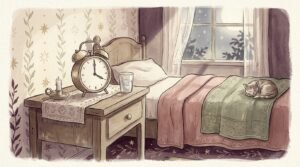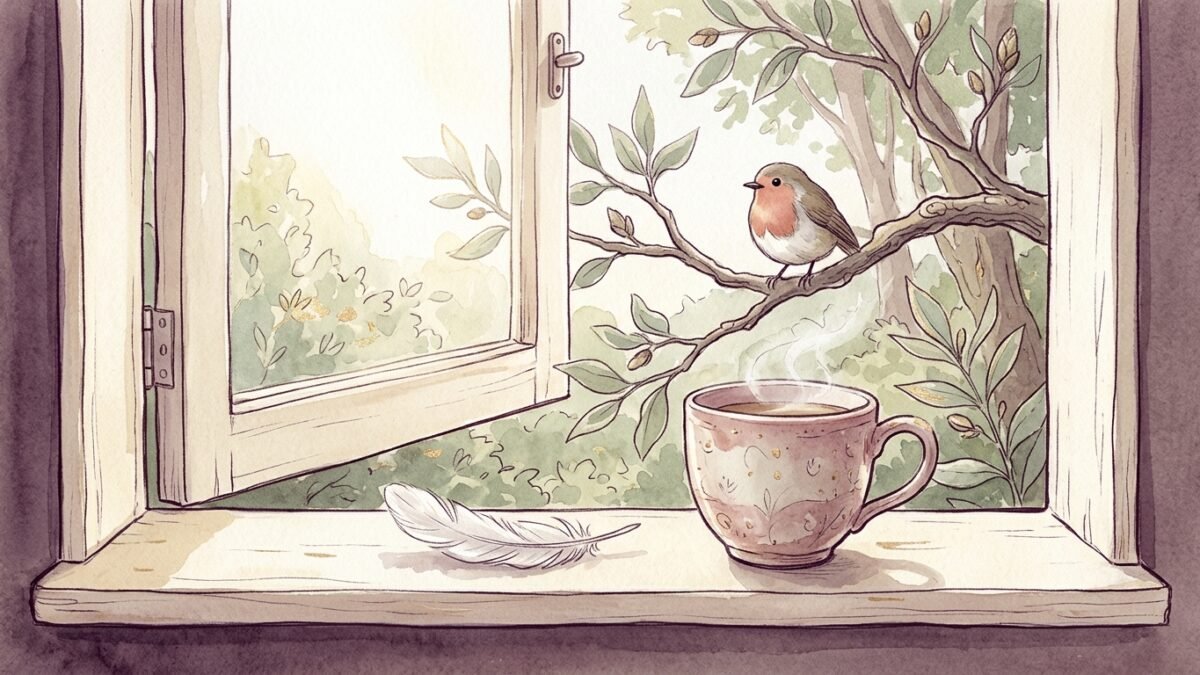
The signs people most often notice after someone dies are small, ordinary things arriving at exactly the wrong or right moment: a robin or a cardinal close by, a white feather where there should not be one, their song on the radio, a sudden smell of their perfume or tobacco, their birthday numbers on a clock, a butterfly that stays, a dream that feels like a visit. Whether you read these as a message from them or as love finding a way to the surface, they are a real and very common part of grief, and you do not have to prove anything to anyone to be comforted by them.
This page is not here to tell you what is true about death. Nobody honestly can. It is here to describe what people experience, what the signs have traditionally meant, and how to hold them in a way that helps.
You are not imagining it, and you are not alone
Feeling that someone who has died is still near is one of the most common experiences in grief. In a well known study in Wales in 1971, nearly half of the widowed people interviewed said they had sensed their husband or wife after death: a feeling of presence, a voice, a touch, a glimpse. Many had never told anyone, because they were afraid of sounding unwell. Later research found the same thing across many countries and found that, for most people, these experiences were comforting rather than frightening.
Grief researchers today talk about continuing bonds: the idea that healthy grieving is not about letting go completely, but about finding a new kind of relationship with the person who died. Noticing them in the world is part of that.
The signs people most often notice
Birds. A robin that comes unusually close, a cardinal on the fence on an anniversary. These two are so widely linked with the dead that the sayings are printed on memorial cards.
Feathers. A white feather on the doorstep, in the car, on a pillow, is perhaps the most reported sign of all.
Smells. A sudden scent of their perfume, their cigarettes, their cooking, in a room where nothing explains it. You can read more in smelling smoke or perfume.
Numbers. Their birthday or the date they died, on a clock, a receipt or a number plate, again and again. See seeing birthday numbers everywhere.
Butterflies and dragonflies. A white butterfly or a dragonfly that lingers near you, especially at a grave or on a day you were thinking of them.
Music. Their song, or a song about them, coming on at the moment you needed it.
Light and electricity. Lights flickering, a radio switching on, a phone lighting up with an old photograph. People mention these often, usually with a little laugh, because they sound unlikely and feel very real.
Coins. Pennies or dimes turning up in odd places, especially in America, where the phrase pennies from heaven is often said with a smile.
Dreams. Dreams in which the person is simply there, calm, often younger or well again, saying very little. People describe these as different from ordinary dreams, and many wake from them feeling lighter.
Rainbows. A rainbow on the day of a funeral is one of the most common stories of all.
Why these moments land so hard
When someone dies, the mind keeps reaching for them. You still half expect the phone to ring at the usual time. So when something that belonged to them appears, a bird they loved, a smell, a song, it lands with a force that ordinary coincidence does not have. Attention, memory and love are all at work.
That explanation does not make the experience smaller. It might even make it more beautiful: the people we love are so woven into how we see the world that the world keeps showing them to us.
How to tell a sign from a wish
Honestly, you cannot, and you do not need to. There is no test that separates a message from a meaningful coincidence, and anyone who promises one is selling something. A better question is: what did it do for you? If a sign brought comfort, made you smile, or helped you get through a hard day, it has done its work, whatever it was. If chasing signs is making you anxious, or you feel you are failing them by not noticing enough, that is a sign of a different kind: a sign to be gentler with yourself.
If the signs have stopped, or never came
Many people worry when they have had no sign, or when the signs they had in the first months stop. That does not mean the person has gone further away, or that they loved you less, or that you are doing grief wrong. Very often the signs are most vivid in early grief, when the mind is searching hardest, and become quieter as the relationship settles into its new shape. Some people never notice anything at all and grieve just as deeply.
If you would like a sign, you can ask for one. Many people choose something specific, a particular flower, a bird, a song, and then let it go. If it comes, it is a gift. If it does not, nothing has been lost.
When grief needs more than a sign
Signs can be a comfort. They are not a substitute for support. If grief is making it hard to sleep, eat, work or get through the day for a long time, or if you feel alone with it, please talk to someone: a friend, your doctor, a bereavement counsellor or a local grief group. Telling someone about the robin or the feather is often a good place to start the conversation.
The cards that sit with it
In tarot, grief belongs to the Five of Cups: a cloaked figure looking down at three spilled cups, with two still standing behind them and a bridge leading home. It does not rush the mourning. It only notes, gently, that something is still standing, and that there is a way back across the river when you are ready.
Memory belongs to the Six of Cups, the card of an old garden and a gift passed from one hand to another. That is often what a sign feels like: something handed to you from an earlier time, still warm.
Questions people ask
How do loved ones send signs?
Nobody can say for certain. The signs people most often report are birds such as robins and cardinals, white feathers, familiar smells, songs, repeating numbers like a birthday, butterflies, coins and vivid dreams. Whether you read them as contact or as love surfacing through memory, they are a common and normal part of grief.
What are the most common signs from someone who has died?
White feathers, robins and cardinals, the smell of their perfume or tobacco, their song on the radio, their birthday numbers on a clock, butterflies or dragonflies, coins and dreams in which they simply appear, calm and well.
Why have I not had a sign?
Many people never notice a sign, and many find the signs fade after the first months. That does not mean the person loved you less or has gone further away. Grief takes many forms, and the absence of a sign says nothing about the bond.
Is it normal to feel someone is with you after they die?
Yes. Sensing the presence of someone who has died is one of the most common experiences in grief, reported by a large share of bereaved people in studies across many countries, and most find it comforting.
What tarot card is about grief?
The Five of Cups, which shows mourning with two cups still standing and a bridge home, is the card most associated with grief. The Six of Cups is the card of memory and of gifts from the past.