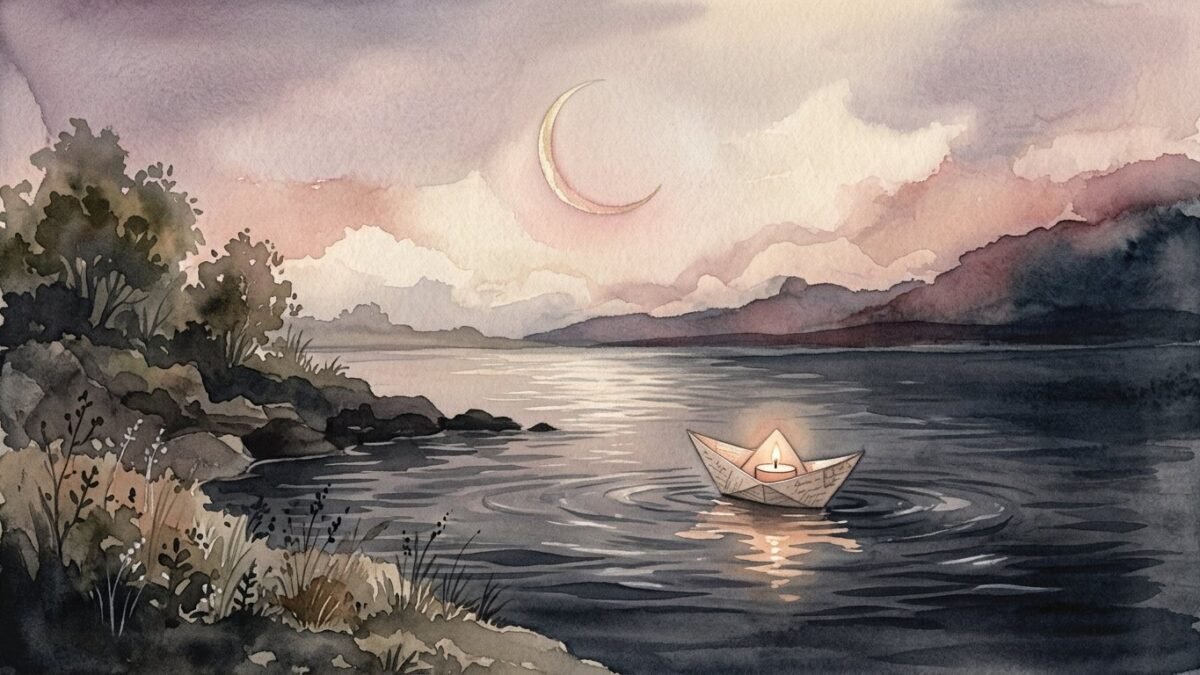
The waning moon is the two weeks after the full one, when the lit part shrinks a little every night until there is nothing left to see. It is the least photographed part of the cycle and the most useful, and almost nobody makes anything of it.
Waxing gibbous
94 percent lit tonight
Almost full, almost ready, and the honest work now is finishing rather than adding.
A reading for tonight's moon One card, read in tonight's light. Free.
Why these two weeks suit endings
Not because the moon does anything to you. The evidence for lunar effects on mood and sleep is thin, and where anything shows up at all it is small enough to argue about.
What the waning moon gives you is a shape. Something visibly getting smaller every night for two weeks is a good container for a thing you are trying to put down, and containers are most of what a ritual is. People are much better at finishing something when the finishing has edges: a start, a middle, an evening where it is done.
There is also the practical matter that the full moon is loud and the new moon is a beginning, and neither of them leaves much room for the quiet, unglamorous business of letting a thing be over.
What you need
Paper, a pen, twenty minutes, and a window if you have one. A candle if you like candles. That is genuinely all, and I would be suspicious of any version of this that requires a purchase.
The twenty minutes
Start by naming the thing in one sentence, out loud, before you write anything. Say it plainly and without the softening clause you would add if somebody else were in the room. The job I am not going back to. The friendship that ended and was never discussed. The version of this year I was expecting in January.
Then write the sentence down, and underneath it write what it cost you. This is the part people skip and it is the part that does the work. Not what it taught you, which is a way of tidying it up before you have looked at it, but what it actually cost: the two years, the confidence, the way you now hesitate before saying what you think in meetings.
Then write one line about what is still true and does not have to go. Almost nothing is entirely a loss, and there is usually something you would keep from it: a skill, a person, a fact about yourself you did not have before.
Then the physical part, which matters more than it should. Tear the paper up and put it in the bin, or wash something, or take one object connected to it out of your line of sight. Not a symbolic gesture at a fire, unless you like fire and you are being careful with it. Something small and real that your hands do.
Why the object matters
Because a house is full of quiet reminders and none of them announce themselves. The mug, the hoodie, the folder on the desktop, the charger in the drawer that belongs to a phone that was never yours.
You do not have to clear the whole lot. Doing that in one dramatic evening tends to produce regret and, in my experience, a slightly frantic second evening spent retrieving things. One object is enough to make the point to yourself.
The letter you do not send
If the thing you are putting down is a person, there is a version of this that works better than the paper exercise, and it is an old one. Write them the whole letter. Everything, including the parts that are unfair and the parts you would be embarrassed to have read out.
Then do not send it. That is not a trick to make you feel better about staying silent. It is that the letter is for you, and sending it would immediately make the whole thing about their reply.
Keep it or tear it up, whichever you prefer, but leave it at least a day before you decide, because the urge to send it tends to peak about twenty minutes after you finish writing.
What to do if you cry
Then you cry, and the evening is working rather than failing. Nobody needs to see it and nothing needs to be posted about it.
Make tea afterward, put something dull on, and let the thing you named stay named. It will still be there tomorrow and it will be slightly less unspeakable.
What this is not
It is not a way of making the feeling stop. Grief and disappointment do not respond to ceremony, and anyone who tells you they can be cleared in an evening is selling the ceremony.
What it does is mark a difference between carrying something and carrying it while pretending you are not. The second one is much heavier.
And none of it needs an audience. This is one of the few evenings that is genuinely worse for being shared, because the moment it becomes something you are seen doing, it starts being performed rather than done.
Doing it with cards
If you want a reading alongside it, three cards is right: what is finished, what it cost, what is still standing. Positions you name yourself work better here than any standard layout, and the three card page explains how to set them.
What would you like to look at
Pick the shape that fits the question. You can change your mind at any point before you draw.
Before we start
Twenty seconds, feet on the floor, hand somewhere warm. Breathe in while the circle grows and out while it settles. You can skip this whenever you like.
What is on your mind
In your own words, as much or as little as you like. You can leave it empty and simply draw.
Your cards
Laying them out now.
Clara
Same cards, one more look.
Did this land?
For self-reflection and entertainment. Not a substitute for medical, legal or financial advice. 18+.
And afterward
Go to bed early if you can. This kind of evening tends to be more tiring than it looks from the outside, and there is nothing else that needs doing tonight.
In two weeks the moon will be new again and that page is for beginnings, which will be easier once this one has actually been put down.