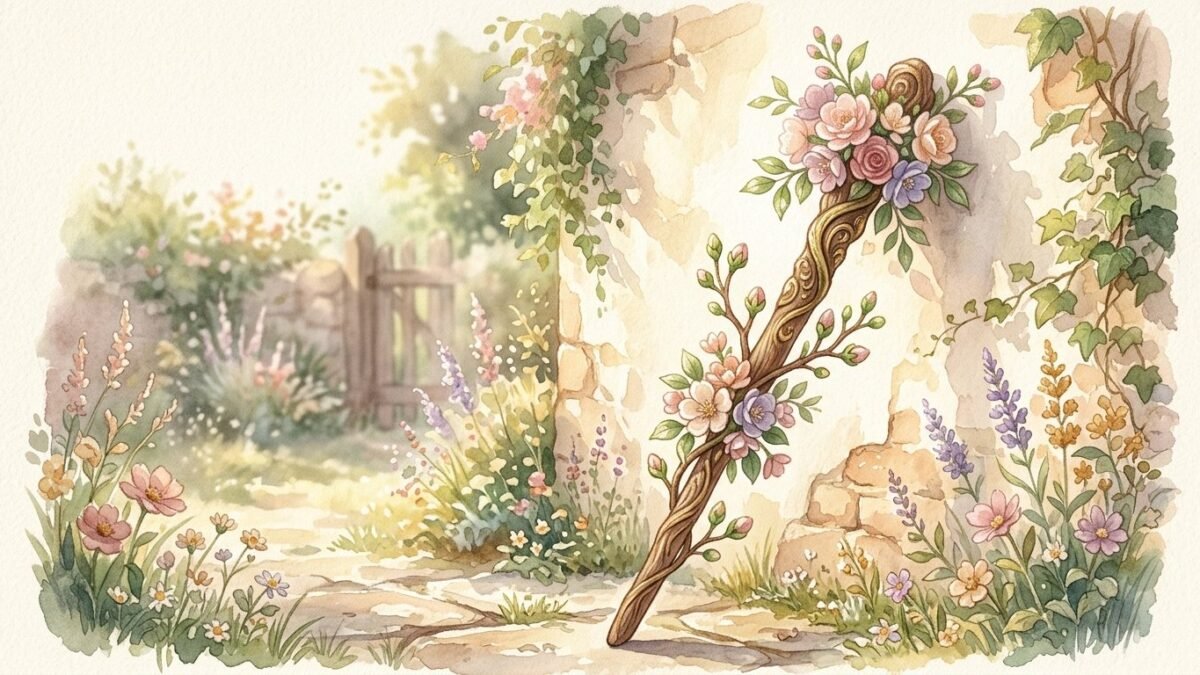
The suit of wands is the fire suit, and in a reading it stands for work, appetite and the wanting to start, which is why the wand on every card is a green branch with new leaves on it rather than a piece of dead wood. It is the suit of Monday mornings, of the project you keep describing to friends, of the argument about who gets to decide, and of the tiredness that comes from having said yes to everything.
Fourteen cards make up the suit, ten numbered from ace to ten and four people, the page, knight, queen and king, and together they follow one appetite from the first flicker to the point where it has learned to sit still. If you have been drawing wands all week, something in you wants to be doing rather than thinking about doing, and the cards are mostly asking what.
Fire, work and appetite
Fire is the element that needs feeding and gets out of hand, and the suit of wands has both problems in it. Too little and nothing starts, so the idea stays as a first page in a notebook with the rest of the pages blank. Too much and everything starts at once, and by Thursday there are four half built things and no finished one. Most wands readings are about which of the two you are doing this week, and the notebook usually tells you which. The suit is also where ambition lives, and we say that plainly because a good deal of tarot writing treats wanting things as slightly embarrassing.
The suit of wands from ace to king
The Ace of Wands is a hand offering a sprouting branch out of a cloud, and it is the wanting itself, before it has a plan or a name. The Two is a man on a battlement holding a small globe, planning the leaving, and the Three is the same man on a cliff watching for ships, waiting to hear back. The Four is a garland strung between four wands with people dancing under it, the party you earned. The Five of Wands is five young men waving sticks at each other, an argument in which nobody is hurt and nothing gets decided.
The Six is a rider with a laurel wreath and a crowd, being seen to have done the thing, and the Seven is a man on a hill with his wand raised against six coming up from below, keeping what he started. The Eight of Wands is eight wands in flight across an empty sky, the week when everything you sent finally moves at once. The Nine is a bandaged man leaning on his wand with eight more behind him like a fence, tired and still on watch, and the Ten of Wands is a figure bent under ten of them, carrying the whole lot toward town because putting some of it down felt like failing.
The four people are fire at four ages. The Page is the eager start, holding the wand up and looking at it as if it might speak, and the Knight is at the gallop, the one who books the flight before checking the dates. The Queen of Wands sits with a sunflower and a black cat at her feet, warmth that holds a room without raising its voice, and the King is fire that has learned to sit still on a throne carved with salamanders and to decide.
The fourteen cards of the suit of wands
- Ace of Wands spark, new idea, desire
- Two of Wands planning, choosing a direction, wider view
- Three of Wands first results, expansion, patience
- Four of Wands celebration, homecoming, stability
- Five of Wands friction, competition, clashing views
- Six of Wands recognition, success, confidence
- Seven of Wands standing your ground, conviction, defending your work
- Eight of Wands speed, momentum, news arriving
- Nine of Wands resilience, almost there, guarded
- Ten of Wands overload, responsibility, carrying too much
- Page of Wands enthusiasm, curiosity, beginner energy
- Knight of Wands boldness, momentum, adventure
- Queen of Wands warmth, self-assurance, magnetism
- King of Wands leadership, vision, decisiveness
Wands in a love reading and in a work reading
In a love reading the suit of wands is about appetite and pace. The Ace is wanting someone, the Two is planning how to see them, the Five is the bickering that is really about who sets the terms, and the Ten is being the one who carries the whole relationship and has started to resent the weight. None of that says anything about what the other person feels, because a card in your reading describes your side of the table, and the wands are honest about which side they are showing you.
In a work reading the suit is at home. The Ace is the idea, the Three is waiting for a reply to the proposal, the Eight is the week it all lands, the Nine is defending a project you are too tired to love, and the Ten is the workload nobody else can see because you keep saying it is fine. The career reading is dealt for questions like these, and it is where a wand reads most plainly.
Reversed wands
A reversed wand is the same fire turned inward, banked, or going out, and none of the three is an omen. The Ace reversed is the idea you keep almost starting, the Five reversed is the quarrel that has moved inside your own head, and the Ten reversed is the load being set down at last, which feels like giving up for an afternoon and like breathing by the weekend. The page on reversed tarot cards has the three ways we read a turned card, and all three apply here.
The wand you can pick up today
Every wands reading comes down to the gap between wanting a thing and having your hands on it, and the gap closes with hands rather than with more planning. So tomorrow, before noon, give the thing you keep describing its first ten minutes, and then write down whether the wanting was still there once you were moving. Either answer is useful, and the notebook will finally have a second page.
Questions people ask
What does the suit of wands represent in tarot?
Fire, which in a life looks like work, appetite, ambition and the wanting to start. Wands cards are about doing rather than feeling or thinking, so they turn up most in questions about jobs, projects, and who gets to decide. The wand on each card is a living branch with leaves on it, which is the suit’s whole point: this is something growing, and it needs feeding and pruning both.
What do wands mean in a love reading?
Appetite and pace, and only on your side. The Ace is wanting someone, the Two is planning how to see them, the Five is the bickering about terms, and the Ten is carrying the whole thing and starting to resent it. None of it tells you what the other person feels, because a card in your reading describes your side, and the wands are plain about which side they show.
What does it mean to draw a lot of wands in a reading?
That the question is about doing, however you phrased it. Three wands in a three card spread say the situation wants your hands on it rather than more thought, and the numbers say where you are: an ace at the start, a five in the argument, a ten under the load. Look for the one card that is not a wand, because that is usually what the doing is for.