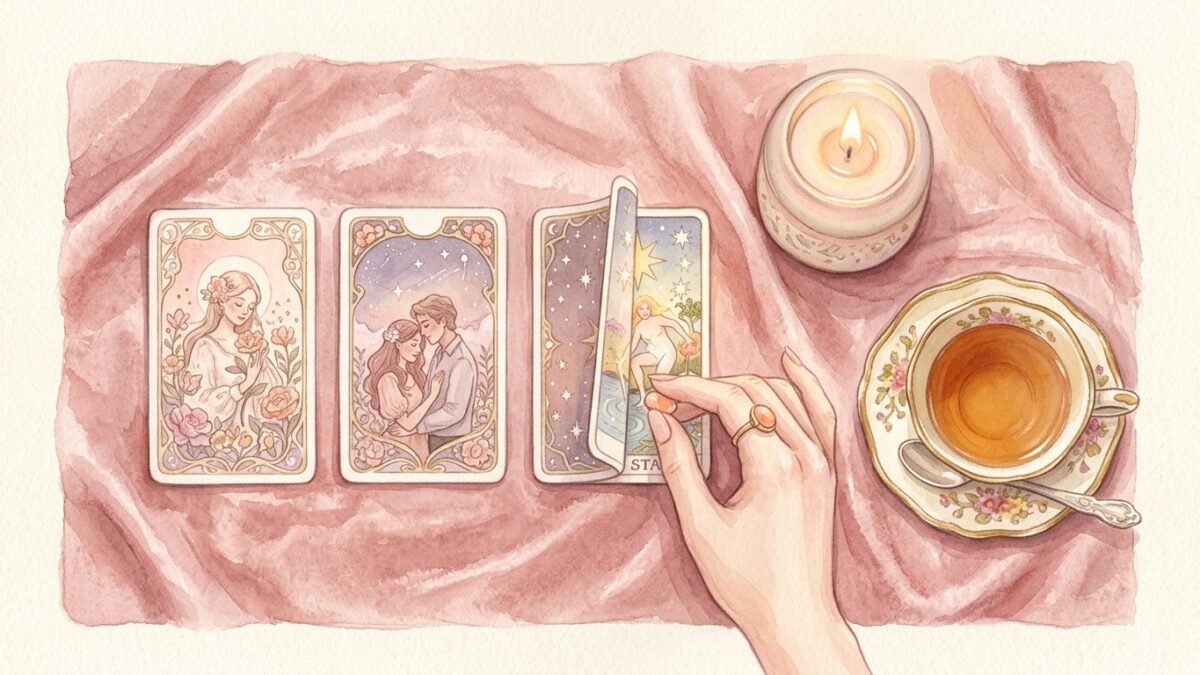
A spread is just a set of chairs. You decide in advance what each seat means, then you deal a card into it and read the card in the light of the seat it landed in. That is the whole trick, and nothing about it requires belief in anything.
What matters is picking the right size for the question. A one card draw is a mood and a nudge and it takes ninety seconds. Three cards will hold a decision. The Celtic Cross has ten positions and it will take you half an hour, which is exactly right for a situation you have been going round in circles about and exactly wrong for whether to text somebody back.
Each page below explains the positions in plain words, says when the spread earns its keep, and gives you a link that starts it for you with the cards already dealt.
Every spread we use
- The daily tarot card
- The one card tarot spread
- The three card spread
- The love spread
- The work spread
- The yes or no draw
- The Celtic Cross
- A tarot spread for guidance
- A tarot spread for decision making
- A tarot spread for the week ahead
- A tarot spread for how someone feels about you
- A tarot spread for the future
- A tarot spread for a relationship
- A will-he-come-back tarot spread
- A self-love tarot spread
Questions people ask
Which spread should a beginner use?
One card, for at least a month. Almost everyone rushes past it to the ten card layout and ends up with a beautiful mess. The single card teaches you to actually read rather than to shuffle meanings together.
Does a bigger spread give a better answer?
It gives a longer one. More cards means more threads to hold, and past a certain point they start contradicting each other in ways that feel meaningful but are mostly noise. Size should follow the question, not your appetite.
Can I ask the same question in a different spread?
You can, once, if the first spread genuinely did not fit the question. Rolling through spreads until one of them tells you what you want is a habit worth catching early, and the cards will not stop you, so you have to.